 Trending in Health & Wellness



There's a molecule in your brain that neuroscientists have been quietly obsessing over for the past two decades. It's called BDNF — Brain-Derived Neurotrophic Factor — and researchers at Harvard, MIT, and the National Institutes of Health have described it as nothing less than "fertilizer for the brain." It supports the growth of new neurons, strengthens the connections between existing brain cells, and plays a central role in learning, memory, focus, and long-term cognitive health. And here's the problem: most adults over 30 are producing far less of it than their brains need.
Now, a new wave of neuroscience research is pointing to a surprisingly simple way to help encourage BDNF activity — through specific sound frequencies that activate Gamma brainwaves, the fastest brainwave frequency, associated with peak mental performance, heightened focus, and deep cognitive processing. The method? A 12-minute digital audio you listen to with headphones. No pills. No meditation practice. No learning curve whatsoever.
"The connection between Gamma brainwave activity and BDNF production is one of the most exciting findings in modern neuroscience," says Dr. James Caldwell, a neurobiologist at the Johns Hopkins Brain Science Institute who has spent 15 years studying brainwave patterns and neuroplasticity. "What makes this particularly promising is that Gamma waves can potentially be stimulated externally — through carefully engineered audio frequencies — meaning you don't need drugs, intense exercise, or years of meditation to encourage this process."
The BDNF Deficiency No One's Warning You About
BDNF is sometimes called the brain's "master growth factor." It's essential for neuroplasticity — the brain's ability to reorganize, adapt, and form new neural pathways throughout life. High BDNF levels are associated with sharp memory, rapid learning, emotional resilience, and protection against age-related cognitive decline. Low BDNF? That's linked to brain fog, poor concentration, memory lapses, anxiety, depression, and accelerated mental aging.
The troubling reality is that BDNF production naturally declines with age — and modern lifestyle factors accelerate the drop dramatically. Chronic stress, poor sleep, sedentary habits, processed diets, and constant screen exposure all suppress BDNF. By the time most adults reach their 40s and 50s, their BDNF levels may be a fraction of what they were in their 20s. The symptoms are painfully familiar: walking into rooms and forgetting why, losing your train of thought mid-sentence, mental fatigue that sleep doesn't fix, and a creeping sense that your mind just isn't as sharp as it used to be.
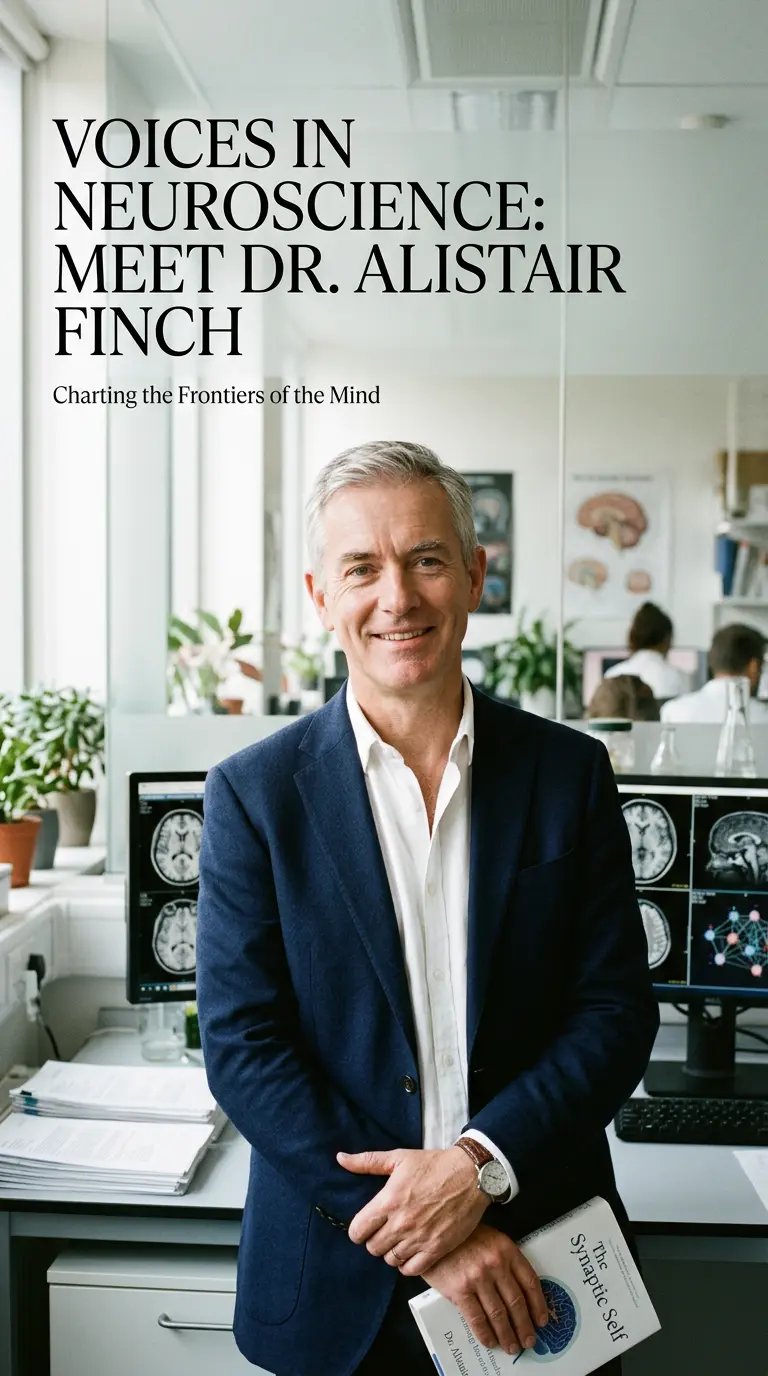
"When we see declining BDNF in a patient, we see declining cognitive function — it's that direct a relationship. The exciting thing about Gamma brainwave stimulation through sound is that it offers a completely passive, non-invasive way to potentially support the brain's own BDNF pathways. You don't have to do anything. You just listen. The audio does the work of guiding your brain into the Gamma frequency range where BDNF activity appears to increase."
Dr. James Caldwell, Ph.D.Neurobiologist, Johns Hopkins Brain Science InstituteThe science centers on Gamma brainwaves — electrical oscillations in the 30–100 Hz range that are the fastest brainwave frequency the brain produces. Gamma waves are generated when the brain is engaged in higher-order thinking: complex problem-solving, intense focus, memory consolidation, and creative insight. Crucially, recent studies have shown that sustained Gamma activity is correlated with elevated BDNF expression — essentially signaling the brain to produce more of its own growth-promoting "fertilizer."
What the Research Actually Shows
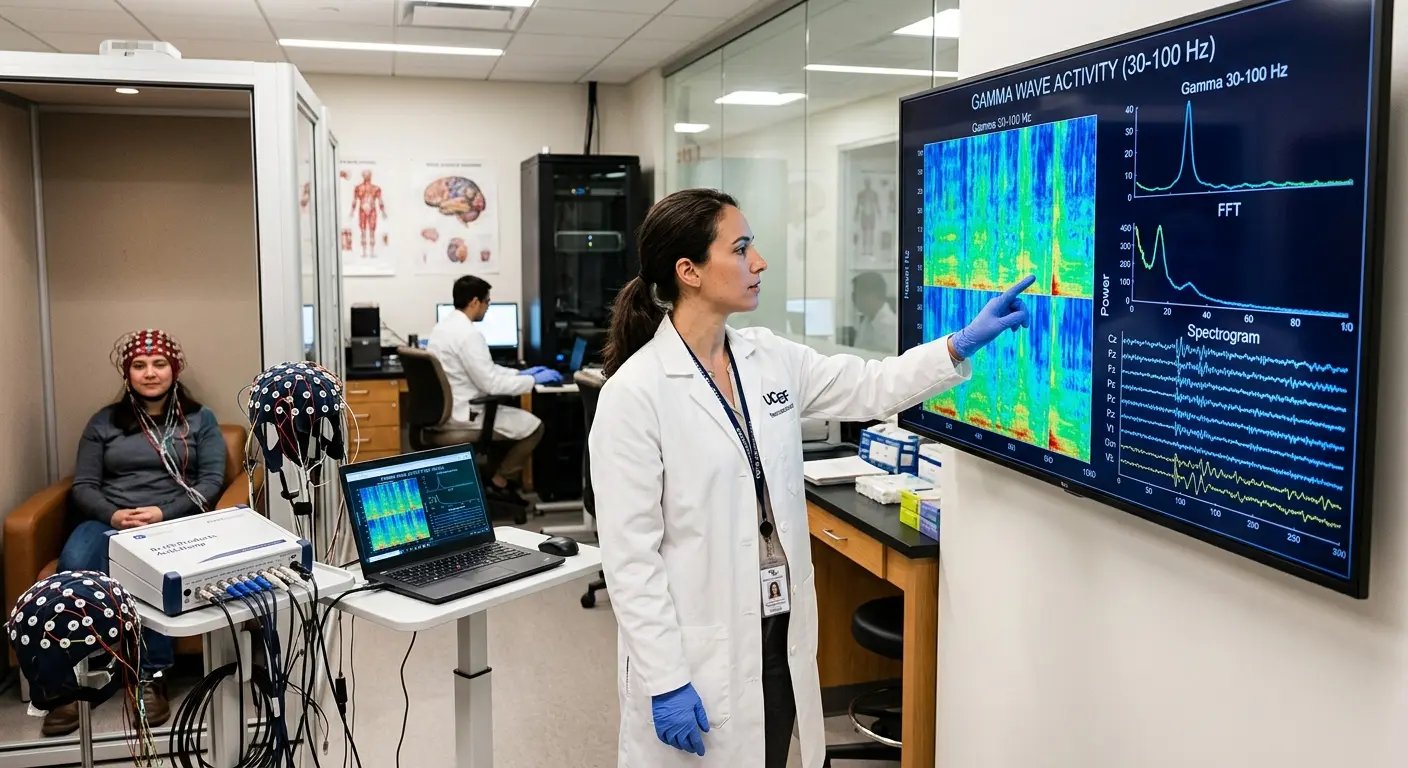
Gamma brainwave research has accelerated dramatically in recent years, with scientists exploring sound-based methods to encourage BDNF activity.
Published research in Nature Neuroscience, the Journal of Neuroscience, and Frontiers in Human Neuroscience has established that Gamma brainwave activity plays a critical role in BDNF regulation. A landmark 2016 MIT study led by Dr. Li-Huei Tsai demonstrated that exposure to 40 Hz Gamma-frequency stimulation reduced amyloid plaques and improved cognitive markers in animal models — a finding that sent shockwaves through the neuroscience community. Subsequent human trials have shown that non-invasive Gamma-frequency audio and light stimulation can measurably increase focus, memory recall, and processing speed in healthy adults.
 Key Research Findings
 Gamma brainwave stimulation at 40 Hz significantly improved cognitive markers and reduced harmful brain plaques in MIT research
- BDNF levels are directly correlated with Gamma wave activity — higher Gamma output is linked to more BDNF production
- Human trials showed measurable improvements in focus, memory recall, and processing speed after consistent Gamma audio exposure
- The technique is entirely passive and non-invasive — zero training, zero side effects, and effective across all adult age groups
Perhaps most remarkable: the benefits weren't limited to young, healthy participants. Adults over 40 — those already experiencing noticeable brain fog, memory slips, and age-related cognitive slowdown — showed some of the most significant improvements. Researchers believe this is because Gamma stimulation targets the underlying BDNF deficiency rather than merely masking symptoms with caffeine or stimulants. It's not covering up the problem. It's helping the brain rebuild from the inside.
From Lab Discovery to Your Living Room: One Audio Program Stands Out
As Gamma brainwave research has gained mainstream scientific attention, a number of audio products have attempted to capitalize on the findings. But the quality gap is enormous. The specific frequencies used, the precision of the sound engineering, the duration calibration, and the layering techniques all determine whether an audio actually guides the brain into Gamma-range activity — or does nothing at all.
One program — The Brain Song™ — has emerged as the clear standout. Developed by a team versed in modern brainwave research, The Brain Song is a simple 12-minute digital audio engineered to gently guide the brain toward Gamma frequencies using advanced sound patterns. No apps to navigate. No subscriptions. No complicated routines. Just put on headphones, press play, and let the audio do the work.

"What makes The Brain Song genuinely interesting from a neuroscience perspective is the specificity of the Gamma-frequency targeting. Most 'brain audio' products on the market use generic frequencies with no real scientific rationale. This one is clearly designed around the 40 Hz Gamma range that the research actually supports. The sound engineering is precise, the session length is appropriate, and it requires absolutely nothing from the user except listening. That's what makes it practical for real people."
Dr. Karen Liu, Ph.D.Cognitive Neuroscientist & BDNF Researcher, UC San Diego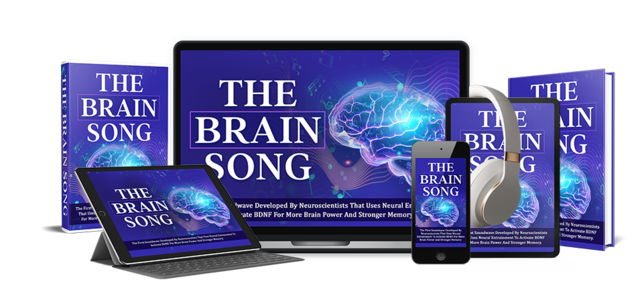
The Brain Song™ — 12-Minute Gamma Brainwave Activation Audio

The #1 Gamma-frequency audio designed to naturally support BDNF activation for a sharper, healthier mind. Simple 12-minute daily routine — just press play.
 Supports natural BDNF activity
- Sharper focus & mental clarity
- Instant digital access
- 90-day money-back guarantee

 90-Day 100% Money-Back Guarantee · One-Time Payment · Lifetime Access
Real People, Real Results
Beyond the research, what's driving the explosive interest in The Brain Song is the wave of testimonials from everyday people who describe the experience as transformational — sharper thinking, better memory, and a mental clarity they haven't felt in years. We spoke with several users who shared their stories.
Verified Purchaser"At 53, I was genuinely worried about my brain. Couldn't remember why I walked into rooms, lost my car in parking lots, felt mentally exhausted by 2pm every single day. My daughter sent me a link to The Brain Song and I tried it to humor her. After three weeks of listening every morning, the fog started lifting. I'm recalling details from conversations I had days ago. My afternoon brain-dead feeling is basically gone. I don't know if it's 'activating my BDNF' or whatever the science says, but something is definitely working."
Verified Purchaser"As a work-from-home mom with two toddlers, I never have time for complicated self-care routines. The Brain Song is literally 12 minutes. I listen during naptime with my eyes closed, and when I open them, my mind feels clear and organized instead of chaotic. I'm more patient with the kids, more productive in the afternoon, and my memory for things like appointments and grocery lists is noticeably better. It sounds too simple to work, but it genuinely does."
Why the Current Pricing Is Worth Noting
The Brain Song is currently available for a one-time payment of just $39 — with instant digital access and a full 90-day money-back guarantee. No subscriptions. No recurring charges. No hidden fees. You pay once, download immediately, and have lifetime access to the audio.
For context, comparable neuroscience-based brain wellness programs and apps charge $15–50 per month in subscription fees. The Brain Song's one-time pricing model — backed by a generous 90-day risk-free guarantee — makes it unusually accessible. The company has indicated that pricing may increase as the product gains wider recognition, so the current $39 price point may not last indefinitely.
The Bottom Line
The neuroscience linking Gamma brainwave activity to BDNF production — and BDNF to long-term brain health — is among the most exciting and well-supported areas of cognitive research today. While no single tool is a magic bullet for brain wellness, The Brain Song represents one of the most thoughtfully designed, research-aligned audio programs available — and its radical simplicity is precisely what makes it practical where more demanding approaches fail.
With its zero-effort 12-minute sessions, instant digital delivery, and a generous 90-day money-back guarantee that eliminates all financial risk, it's easy to see why The Brain Song has become one of the most talked-about brain wellness discoveries of the year. Where neuroscience meets sound, this may be the simplest investment you ever make in your cognitive health.
For readers interested in supporting their brain's natural BDNF pathways and experiencing sharper focus, better memory, and clearer thinking, The Brain Song is available exclusively through their official website. Given the current $39 one-time pricing with a 90-day guarantee, it may be worth trying sooner rather than later.

Thousands of adults are incorporating The Brain Song's 12-minute Gamma audio into their daily routines — supporting sharper minds at any age.


"I was very skeptical of the whole 'brain audio' thing. But I figured $39 with a 90-day guarantee — what's the risk? Two weeks in, I noticed I was actually finishing articles, remembering names again, and staying focused through meetings without zoning out. It's just 12 minutes with headphones in the morning. My husband noticed the difference before I did. He said I seem 'sharper and more present.' I'm a believer now."